
 Inquiry Lists
 Download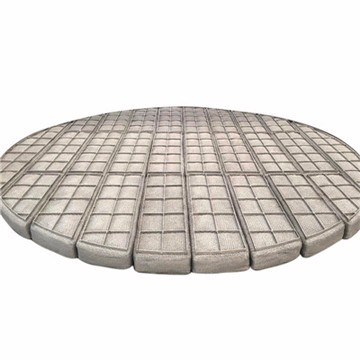
DN4000 demister mist eliminator 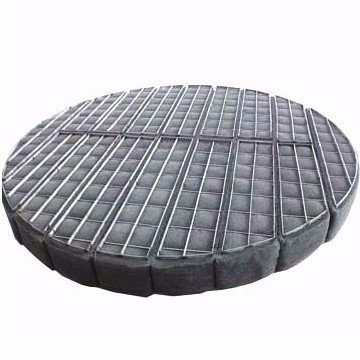
DN3600 demister mist eliminator 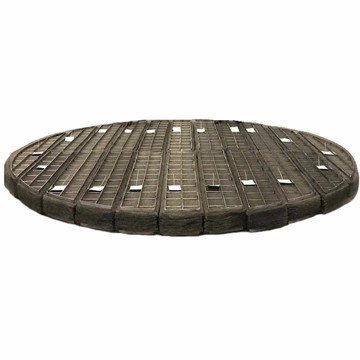
DN3200 demister mist eliminator 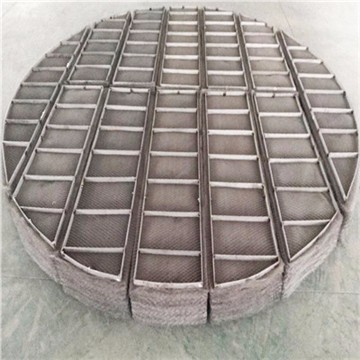
DN3000 demister mist eliminator 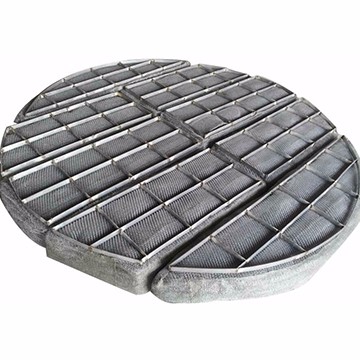
DN2400 demister mist eliminator 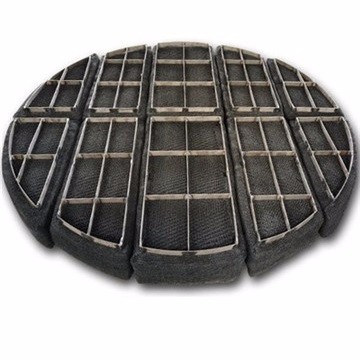
DN1800 demister mist eliminator 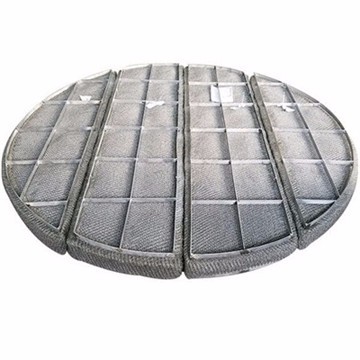
DN1500 demister mist eliminator 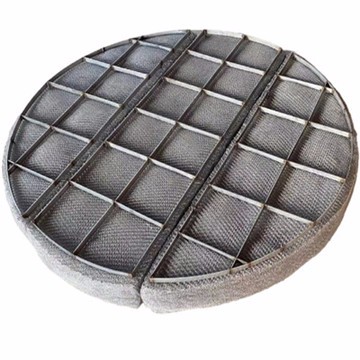
DN1100 demister mist eliminator 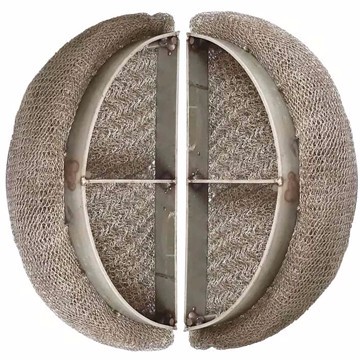
DN800 demister mist eliminator 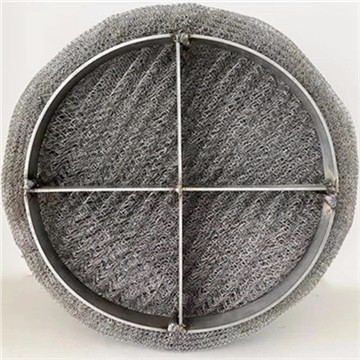
DN400 demister mist eliminator
Demister Pads Function
In the separation process, the droplets flow through the mesh pads and collide with the surface of the wire due to their inertia.
The collected droplets coalescence at the cross points in the mesh pad and fall back as larger droplets into the vessel.
The separation efficiency improves with increasing flow velocity. The maximum flow velocity must not be exceeded, however since flooding will cause re-entrainment to occur.
The maximum droplet diameter for 99.9% fraction separation efficiency is within a range of 5 μm to 12 μm for standard mesh types.
The wire mesh droplet demisters are made of fine wires with different mesh widths whereby the wire diameter generally ranges between 0.2 mm and 0.5 mm.
The specific surfaces, depending on the type, are between around 150 m2/m3 to around 1100 m2/m3.
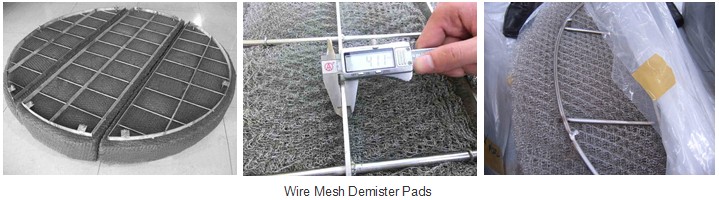
Specially designed supports and cover grids are generally supplied to support the mesh pads, which are arranged so that the free inflow area is approximately 90%.
When installing the wire mesh, the mesh pad must fit tightly to the wall of the column to prevent any gas leaking through.
The pad of the wire mesh droplet separators (demisters) is between 100 and 150 mm thick in most applications.
If the gas- or steam flow contains very fine droplets, e.g. as created during condensation, considerably deeper pads or multiple layers are required.
Add: The East Zone Development Industry, Hebei, China 0086-311-89255081
zhao@webwirecloth.com
Support:NINEWIN INTERACTION